

Calgary website design for manufacturing companies has never been more competitive, and yet a surprising number of local manufacturers still rely on outdated websites that fail to represent their capabilities or generate qualified leads. In an industry where trust, precision, and technical credibility are everything, your website is often the first impression a procurement manager or potential partner will have of your business. If that impression falls flat, the opportunity is likely gone before a conversation even starts.
This guide is written specifically for Calgary-based manufacturers who are ready to invest in a professional online presence that works as hard as their operations do. We will walk through why manufacturing companies need specialized web design, what features your site must include, why WordPress is the right platform for this industry, how to approach local SEO, and what your project timeline should look like from kickoff to launch. Whether you are building from scratch or redesigning an aging site, this guide covers everything you need to make an informed decision.
Key Takeaways
- Calgary website design for manufacturing requires industry-specific thinking, not a generic template approach
- Manufacturing websites must prioritize technical credibility, lead generation, and product or capability showcasing
- WordPress is the most flexible and scalable platform for complex manufacturing site requirements
- Local SEO strategies, including Google Business Profile optimization and location-based content, drive qualified Calgary leads
- Mobile responsiveness and fast load times are non-negotiable for reaching procurement professionals on any device
- A well-structured product or services catalog reduces friction in the buying process and shortens the sales cycle
- Integrating RFQ (request for quote) forms and downloadable spec sheets directly on the site increases conversion rates
- A phased project timeline of eight to twelve weeks is realistic for a quality manufacturing website build
Why Manufacturing Companies Need Specialized Website Design
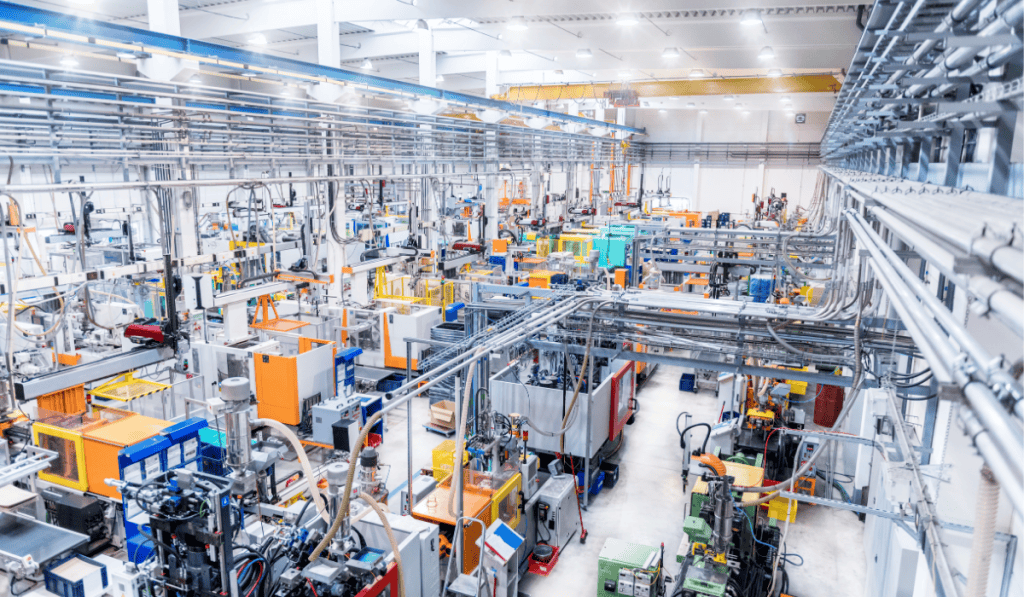
Most web design agencies build websites the same way regardless of industry: choose a theme, load in some stock photos, write a few service descriptions, and call it done. That approach simply does not work for manufacturers. The buying process in manufacturing is longer, more complex, and more relationship-driven than in most other industries. A procurement officer evaluating a potential supplier is not making an impulse decision. They are looking for evidence of capability, certifications, production volume, lead times, quality control processes, and industry experience. Your website needs to communicate all of that clearly and efficiently.
Manufacturing websites also serve multiple distinct audiences simultaneously. A company producing industrial components might need to speak to engineers who want technical data sheets, purchasing managers who need pricing structures, and executives who want to understand business stability and delivery reliability. A generic website cannot serve all three audiences effectively. Specialized design means creating content hierarchies, navigation structures, and page layouts that guide each type of visitor to the information most relevant to them without confusion or dead ends.
The Cost of an Outdated or Generic Manufacturing Website
An outdated website does not just look bad, it actively costs you business. If a potential client in Calgary is comparing three local manufacturers and two of them have clean, professional, content-rich websites while yours was last updated several years ago, the odds are stacked against you before the first call. Procurement professionals often conduct extensive online research before reaching out to any vendor. If your site does not rank in search results, does not load properly on mobile, or lacks the specific technical content they need, you will not even make it onto the shortlist.
Beyond lost leads, an outdated site can damage your credibility with existing clients who share your website with colleagues or refer your business to others. Your website is a reflection of how seriously you take your business, and by extension, how seriously clients can expect you to take theirs.
Key Features Manufacturing Websites Must Have
Product and Capabilities Showcasing
The single most important content section on a manufacturing website is a detailed showcase of your products or capabilities. This means going well beyond a brief paragraph on your homepage. You need dedicated pages for each major product line or service category, with specifications, tolerances, materials, applications, and photos or videos of finished work. If you do custom fabrication, show examples. If you produce high-volume runs, highlight your capacity. If you hold certifications like ISO 9001 or CSA standards, those need to be prominently displayed.
Video content is especially powerful in manufacturing. A short walkthrough of your facility, a time-lapse of a machining process, or a product demonstration video can communicate expertise far more effectively than written descriptions alone. These assets also improve time-on-site metrics, which signals quality to search engines.
Request for Quote (RFQ) Functionality
One of the highest-value features you can add to a manufacturing website is a well-designed RFQ form. This allows potential clients to submit project details, quantities, material requirements, and deadlines directly through the site, giving your sales team the information they need to respond with an accurate quote quickly. A simple contact form is not enough. An RFQ form tailored to your specific products or services reduces the back-and-forth typically involved in quoting and demonstrates to the client that you understand their workflow.
RFQ forms can also be integrated with your CRM or quoting software, creating a streamlined pipeline from inquiry to proposal without manual data entry. This kind of functionality is a strong argument for working with a developer who understands both WordPress and your industry’s operational needs.
Downloadable Resources and Technical Documentation
Engineers and technical buyers want data. Providing downloadable spec sheets, material certifications, CAD files, or product data sheets directly on your website positions you as a transparent and capable supplier. It also reduces the time your sales team spends answering repetitive technical questions, because the answers are already on the site. A gated download (where the visitor provides their email address in exchange for a resource) can also serve as a lead capture mechanism, helping you grow a list of qualified prospects.
Trust Signals and Social Proof
Client logos, case studies, project galleries, and testimonials are critical for manufacturing websites. Unlike retail or service industries, manufacturing buyers often want to see that you have worked with companies of similar scale or in similar sectors. A testimonial from a plant manager at a well-known Calgary firm carries more weight than a generic five-star review. If you have long-standing client relationships, ask for a quote you can feature on your site.
Certifications, affiliations with industry associations, and awards should also appear on the site in a dedicated section or footer element. These small signals build trust cumulatively, and they matter to buyers who are evaluating risk as much as capability.
WordPress as the Ideal Platform for Manufacturing Websites

Flexibility for Complex Content Requirements
WordPress powers a significant portion of the web because it is genuinely versatile, and that versatility makes it particularly well-suited to manufacturing websites. Unlike closed platforms that limit what you can build, WordPress Development allows for custom post types, advanced taxonomies, and complex page layouts that can accommodate product catalogs, technical documentation libraries, multilingual content, and RFQ integrations. You are not constrained by a template.
For manufacturers with large product catalogs, WordPress can be extended with plugins like Advanced Custom Fields or custom-built solutions that allow non-technical staff to update product pages without touching code. This is a significant long-term operational benefit, because your marketing team can keep the site current without relying on a developer for every small change.
Scalability as Your Business Grows
Manufacturing businesses evolve. You add product lines, enter new markets, earn new certifications, and expand your client base. Your website needs to grow with you. WordPress scales exceptionally well. You can start with a focused ten-page site and expand to a hundred-page resource-rich platform over time without migrating to a new system. Adding eCommerce functionality for spare parts or consumables is straightforward with WooCommerce, which integrates natively with WordPress. If your business eventually needs eCommerce web design capabilities, that expansion is a natural evolution rather than a full rebuild.
Ongoing Maintenance and Security
Manufacturing websites often contain sensitive information, client portals, or integrated systems that require consistent security attention. WordPress, when properly maintained, is a secure and reliable platform. That said, maintenance should not be an afterthought. Regular plugin updates, security scans, uptime monitoring, and backup management are essential for keeping your site performant and protected. A professional website maintenance plan ensures your site continues to function correctly and securely without demanding your internal team’s time.
Responsive web design Calgary considerations are also built into modern WordPress themes and frameworks, ensuring that procurement professionals accessing your site from a tablet on the shop floor or a phone between meetings get the same quality experience as a desktop user in a corporate office.
SEO Strategies Specific to Manufacturing in Calgary
Local SEO for Calgary Website Design for Manufacturing
Calgary website design for manufacturing is only effective if the right people can find your website in the first place. Local SEO for manufacturers involves a specific set of tactics that differ from generic national campaigns. The starting point is a fully optimized Google Business Profile, which should include accurate business categories, service area details for the greater Calgary region, updated photos of your facility, and consistent contact information that matches your website exactly.
On-site SEO for manufacturing companies should target both broad capability keywords (such as “custom metal fabrication Calgary” or “industrial coating services Alberta”) and highly specific long-tail queries that reflect the language your buyers actually use when searching. Procurement professionals often search with very precise terminology. Matching that language in your page titles, headers, and body content is what puts you in front of qualified leads rather than general web traffic.
Content Marketing for Manufacturing Authority
Publishing technical content such as guides, case studies, process explanations, and material comparisons builds search authority and demonstrates expertise to potential clients simultaneously. A Calgary manufacturer who publishes a detailed guide on tolerances for aerospace components, for example, will attract exactly the kind of visitor they want to convert. This content also earns backlinks from industry directories, trade publications, and association websites, which improves domain authority over time.
SEO services Calgary from a team that understands both technical SEO and manufacturing industry dynamics can help you develop a keyword strategy, optimize existing pages, and build a content calendar that generates compounding organic traffic. The goal is not just rankings, but rankings for the specific searches your ideal clients are making.
Technical SEO Considerations
Manufacturing websites often have large image files from product photos and facility shots. Without proper optimization, these can slow page load times significantly, which hurts both user experience and search rankings. Image compression, lazy loading, caching, and a content delivery network are all technical measures that keep your site fast. Schema markup for products, organization details, and local business data also helps search engines understand and display your content accurately in search results.
Case Studies: Successful Manufacturing Websites Built in WordPress
Industrial Components Manufacturer
A Calgary-based precision machining company came to us with a website that had not been updated in several years. They had no online presence beyond a basic homepage, no product pages, and a contact form that went to a shared inbox nobody monitored consistently. After a full WordPress redesign, they launched a site with individual pages for each of their seven service categories, a gallery of completed projects, an RFQ form integrated with their CRM, and a blog covering topics relevant to their aerospace and oil and gas clients.
Within six months of launch, organic search traffic had increased substantially, and more importantly, the quality of inbound inquiries improved because the site now pre-qualified visitors before they reached out. Prospects were arriving with a clear understanding of what the company did and with the technical questions they needed answered, making the sales conversations shorter and more efficient.
Custom Fabrication and Assembly Shop
A family-owned fabrication business in the southeast Calgary industrial district needed a website that could support their push into larger commercial contracts. They had a credibility gap: they did excellent work, but their online presence made them look smaller than they were. The new WordPress site included a capabilities page with photos of their equipment and facility, a client logo section featuring recognizable regional brands, downloadable material specifications, and a project portfolio organized by industry sector.
The Calgary branding agency work done alongside the website, including a refreshed logo and consistent visual identity, helped tie the whole presentation together. The company reported that multiple prospects specifically mentioned the website during initial conversations as a reason they reached out, describing it as professional and easy to navigate.
Getting Started: Your Manufacturing Website Project Timeline

Phase One: Discovery and Strategy (Weeks One and Two)
Before any design work begins, a quality web design partner will invest time in understanding your business, your clients, and your goals. This means interviewing key stakeholders, reviewing your existing site’s analytics, auditing competitors, and developing a clear sitemap and content strategy. For manufacturing companies, this phase should also include an inventory of all the technical content and assets you already have, including product specs, photography, certifications, and case study material.
This upfront investment pays off significantly later in the project. Clients who skip discovery often find themselves making major structural changes mid-build, which adds time and cost.
Phase Two: Design and Content Development (Weeks Three through Six)
Once the strategy is locked in, visual design begins alongside content development. For manufacturing websites, content is often the longest phase, because technical writing, sourcing photography, and gathering documentation takes time. It is worth engaging a professional copywriter with manufacturing or industrial experience if your internal team does not have capacity to produce the content quickly.
Design mockups should be reviewed by all key decision-makers during this phase to consolidate feedback before development begins. Iterating on design in a visual mockup is far more efficient than making changes to a built site.
Phase Three: Development, Testing, and Launch (Weeks Seven through Twelve)
Development on WordPress involves building out the approved designs, integrating all functionality (RFQ forms, CRM connections, SEO plugins, analytics), and loading all content. Quality testing covers browser compatibility, mobile responsiveness, form functionality, page speed, and SEO setup. A staging environment allows the full site to be reviewed before going live, so there are no surprises on launch day.
Post-launch, the first few weeks should include monitoring of analytics, form submissions, and any technical issues that arise in production. A good development partner will stay available through this period to address anything that comes up promptly.
Ready to Build a Manufacturing Website That Works as Hard as You Do?
Your website should be one of your most effective sales tools, not an afterthought. For Calgary manufacturers competing for contracts with regional, national, and international clients, a professionally designed WordPress website is a genuine competitive advantage. The right site communicates your capabilities clearly, attracts qualified leads through search, and shortens the sales cycle by giving prospects exactly what they need to make a decision.
Clio Websites builds WordPress sites specifically designed for Calgary businesses that need more than a generic template. Our team understands the manufacturing sector, the local market, and the technical requirements that make a site perform from day one.
Book your free consultation with Clio Websites to discuss your manufacturing website project and get a clear picture of what a proper build looks like for your business.